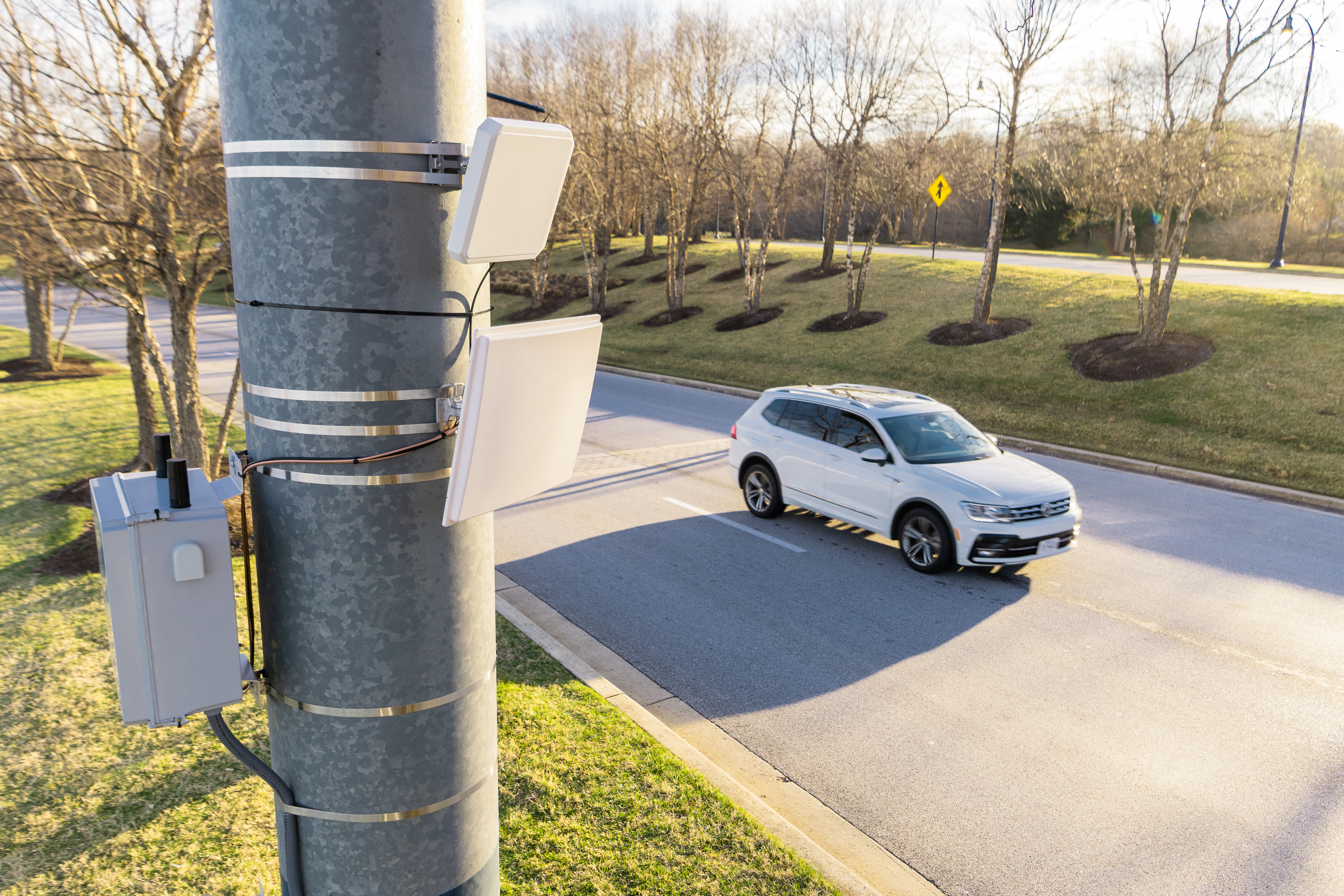
Across the United States, law enforcement agencies are increasingly turning to high-tech surveillance tools like automated license plate recognition (ALPR) systems to bolster public safety. These systems can scan thousands of plates per minute, alerting officers in real time to stolen vehicles, missing persons, and wanted suspects.
We know firsthand how powerful this technology is. An ALPR camera can capture roughly 1,800 license plate images every minute. That level of capability delivers undeniable crime-fighting benefits.
But with that reach comes responsibility.
At Leonardo, we believe public safety technology must operate in strict accordance with the law, with full transparency, and with deep respect for civil liberties. Compliance and public trust are not optional add-ons. They are foundational requirements.
A Nationwide Standard for ALPR Oversight
The conversation around surveillance oversight is no longer confined to a handful of states. It is national. At least 16 states have enacted statutes explicitly governing the use of ALPR systems and the data they collect. These laws vary in scope, but they share a common message: public safety technologies must operate under clear rules that safeguard privacy, accountability, and transparency.
Across the country, legislatures are establishing:
-
Data retention limits, often capping storage at 21, 30, or 90 days unless tied to an active investigation.
-
Mandatory audit trails, requiring comprehensive logs of system access and periodic reviews.
-
Strict data access and sharing controls, limiting who can query ALPR data and prohibiting unrelated uses.
-
Transparency requirements, including published policies and annual reporting.
We see this legislative wave not as an obstacle, but as validation. Lawmakers are recognizing what we have long believed: leveraging technology for safety must never come at the expense of constitutional rights or community trust.
For law enforcement leaders, compliance is both a legal mandate and an ethical obligation. For technology providers like us, the message is unmistakable: if a product cannot meet the highest bar of compliance and transparency, it has no place in our communities.
The High Cost of Low Standards
In recent years, the ALPR industry has seen what happens when surveillance technology outpaces oversight. Data-sharing violations. Secretive vendor agreements. Litigation. State audits. Public backlash.
In Illinois, a major ALPR vendor was found to have allowed unauthorized federal searches in violation of state law. The program was halted. Trust was damaged. The vendor faced national scrutiny. Other companies have faced criticism for aggregating vast amounts of plate data into centralized databases, selling access to thousands of agencies, or requiring non-disclosure agreements that limited transparency. These practices fueled distrust and accelerated legislative crackdowns.
In California, a state audit found agencies failing to audit their systems properly and retaining data longer than justified. The fallout included public criticism, mandatory reforms, and shaken community confidence.
The pattern is clear. When surveillance technology is deployed without rigorous compliance and oversight, consequences follow: lawsuits, audits, bans, and reputational damage. Most importantly, public trust erodes. At Leonardo, we believe the lesson is simple: compliance cannot be reactive. It must be built into the technology from the start.
Technology Built on Trust and Compliance
For more than 20 years, we have designed and delivered ALPR solutions through our ELSAG ALPR platform with one principle in mind: public safety and civil liberties are not mutually exclusive.
Our approach is fundamentally different from data-aggregation models:
- We do not monetize our customers’ license plate data.
- We do not aggregate it into a national commercial database.
- We do not treat community data as a commodity.
When an agency uses our ALPR system, the data belongs to that agency — period. It is stored on agency-controlled servers or in a dedicated cloud environment. It is never commingled into a vendor-controlled nationwide pool. Data sharing is strictly opt-in and entirely under the agency’s control. This privacy-by-design model prevents the kinds of surprise data-sharing scandals that have damaged public confidence elsewhere. It gives communities autonomy and ensures compliance with local and state laws.
Built-In Transparency and Oversight
Every action within our system is logged in a tamper-proof audit trail. Each query records who accessed what data, when, and for what purpose. Supervisors can review these logs at any time.
Our platform enforces:
-
Role-based access controls
-
Multi-factor authentication
-
CJIS-compliant security standards
-
Encryption at rest and in transit
-
Automatic retention configuration aligned with state law
If a state mandates 21-day retention, the system can enforce it. If an investigation requires extended preservation, the justification is logged. Compliance is not an afterthought. It is engineered into system architecture.
We align our solutions with FBI CJIS security requirements and with evolving state privacy laws. We conduct background checks for personnel handling sensitive systems. We design our products so agencies can easily demonstrate compliance during audits. In short, we do not cut corners — because public safety cannot come at the expense of civil liberties.
Leadership and the Road Ahead
Ensuring surveillance technology meets American legal and ethical standards ultimately comes down to leadership.
Law enforcement executives, city officials, and investors must ask:
-
Does this vendor enable compliance with our state’s requirements?
-
Can we prove to our community that we are using this responsibly?
-
Are privacy and civil rights treated as non-negotiable design elements?
The regulatory trend is only moving in one direction: toward more oversight, more transparency, and higher standards. Business models built on data exploitation or regulatory evasion will not survive. Responsible innovation is not just ethical — it is strategic.
Communities are scrutinizing surveillance deployments more than ever before. Agencies are demanding accountability from their technology partners. Vendors that can demonstrate built-in compliance and a proven commitment to privacy will lead the market. We believe advanced technology and civil liberties can coexist — but only when systems are designed that way from day one.
The Choice Before Us
This is not an argument against ALPR or public safety technology. We do not have to choose between safety and privacy. The real choice is between doing things right and doing them wrong. Strong compliance, transparency, and oversight are not barriers to innovation. They are what make innovation sustainable in a democratic society.
When agencies deploy technology responsibly, communities support it. When vendors operate transparently, trust grows. When safeguards are built in from the start, the focus remains where it belongs: on stopping crime and protecting the public. America is both a nation of innovation and a nation of laws. The right response to concerns about surveillance is not to abandon technology, but to civilize it — to embed accountability into its design.
At Leonardo, we are committed to that path. Public safety technology must enhance safety while strengthening trust. That requires restraint, oversight, and respect for civil liberties at every stage of development and deployment. The cameras may be automated, but accountability is not. We choose to build technology that upholds our laws, reflects our values, and earns the trust of the communities it serves.
And we believe that is the only sustainable path forward.